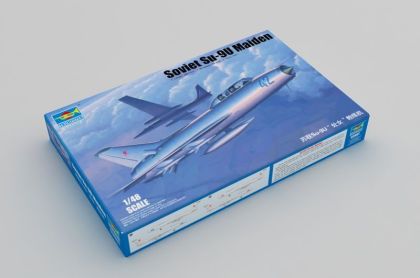
The Su-9's fuselage and tail surfaces resembled those of the Su-7, but unlike the swept wing of that aircraft, the 'Fishpot' used a 53° delta wing with conventional slab tailplanes.
The Su-9 had primitive R1L radar in the shock cone and was armed with four K-5 (AA-1 'Alkali') beam-riding air-to-air missiles. Like all beam-riders, the K-5 was so limited as to be nearly useless for air-to-air combat. Unlike the Su-7 and later Su-15, no Su-9 carried cannon armament, although two fuselage pylons were reserved for the carriage of drop tanks.
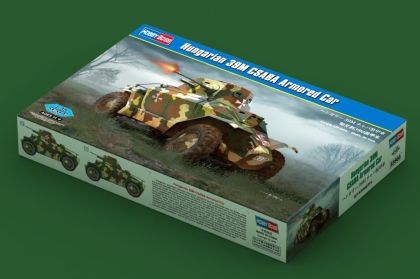
Hungarian expatriate Nicholas Straussler designed several armoured cars for Britainwhile living there between the two world wars. Straussler came to an agreement with the Weiss Manfred factory of Csepel, Budapest to produce vehicles from his designs for use in his home country - the most prominent was the Csaba (named after the son of Attila the Hun) which was designed based on his experience of the Alvis AC2 armoured car.After successful trials in 1939, the Hungarian Army placed an order for 61, and a further order for an additional 40 vehicles was placed in 1940. Of these, twenty were used as actual fighting vehicles, with the remainder serving as armoured command cars and reconnaissance vehicles.The Csaba had a 20mm cannon and an 8mm machine gun fixed on a centrally mounted turret, with 9mm armoured plating. The vehicle was also equipped with a detachable 8mm light machine gun fired through the rear hatch in the anti-aircraft role. The crew could dismou
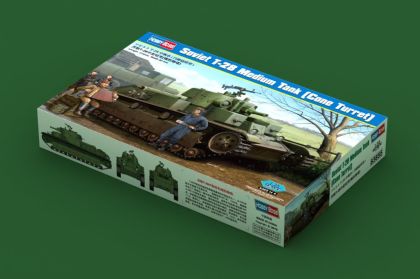
The Soviet T-28 was among the world's first medium tanks. The prototype was completed in 1931 and production began in late 1932. It was an infantry-support tank intended to break through fortified defences. The T-28 was designed to complement the heavier T-35, with which it shared many components. The type would not have that much success in combat, but it played an important role as a development project for the Soviet designers. A series of new ideas and solutions were tried out on the T-28 and were later incorporated in future models.
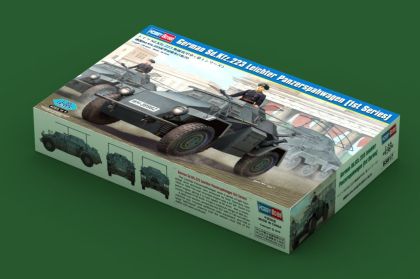
The Leichter Panzerspähwagen were a series of light four-wheel drive armoured cars produced by Nazi Germany from 1935 to 1944.The rear mounted engine was a 67 kW Horch 3.5 petrol engine, giving it a road speed of 80 km/h and a cross-country speed of 40 km/h. It had a maximum range of 300 km.
A radio car version, armed like the 221 with a 7.92 mm MG34 machine gun. Included additional radio equipment, and had a large "bed-frame" antenna over the vehicle. Over 500 of the SdKfz 223 were produced.
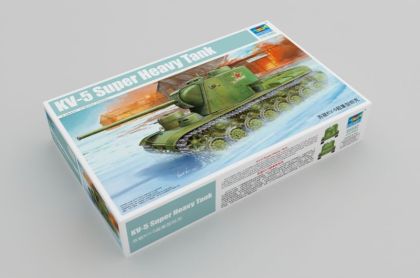
KV-5 (Object 225) - A cancelled project for a super-heavy tank. Armament was to be a 107 mm ZiS-6 gun in a large turret and machine-gun in a small secondary turret. Weight was projected as about 100 tons, and the tank was to have 150-180mm of armor. Project development began in June 1941, however was cancelled due to the Siege of Leningrad, in which all developmental operations at the Kirov Plant were halted. The project fell out of favour from the more advanced heavy tank designs, and no prototype was built.
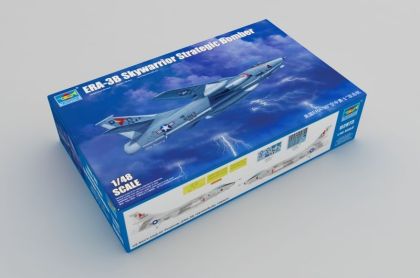
The Douglas A-3“Skywarrior”was a strategic nuclear bomber developed for the US Navy. The aircraft had a largely conventional semi- monocoque fuselage, with two J57 turbojet engines in underwing nacelles, A-3's wings can be folded for storage below deck, radar-controlled tail turret and a crew of three. The A-3 Skywarrior project started in 1947,The prototype XA3D-1 first flew on 28 October 1952, entered service with the Navy Heavy Attack Squadron One in 1956.Production ended in 1961. Douglas total built 282 Skywarriors.
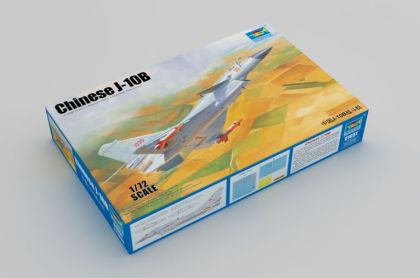
The Chengdu J-10B is the multi-role fighter developed from the J-10A Vigorous Dragon.The prototype took the first flight in December,2008.Now the J-10B has been put into production.
The J-10B made a lot of changes such like the DIS air intake,the new vertical tail antenna and some latest avionics which cann’t be identified from the appearance.
Different from the prototype,the production J-10B updated the avionics,some antennas were added.The first production J-10B are now in test and soon will be put into service.
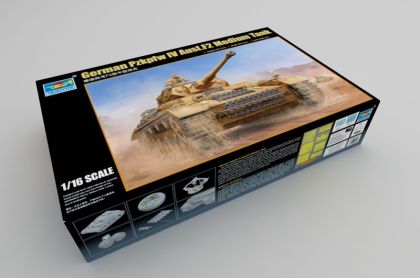
The Panzerkampfwagen IV (Pz.Kpfw. IV) Sd Kfz 161, commonly known as the Panzer IV, was a medium tank developed in Nazi Germany in the late 1930s and used extensively during the Second World War. Its ordnance inventory designation was Sd.Kfz. 161.
Designed as an infantry-support tank, the Panzer IV was not originally intended to engage enemy armour—that function was performed by the lighter Panzer III. However, with the flaws of pre-war doctrine becoming apparent, and in the face of Soviet T-34 tanks, the Panzer IV soon assumed the tank-fighting role of its increasingly obsolete cousin. The most widely manufactured and deployed German tank of the Second World War, the Panzer IV was used as the base for many other fighting vehicles, including the Sturmgeschütz IV tank destroyer, the Wirbelwind self-propelled anti-aircraft weapon, and the Brummbär self-propelled gun, amongst others.
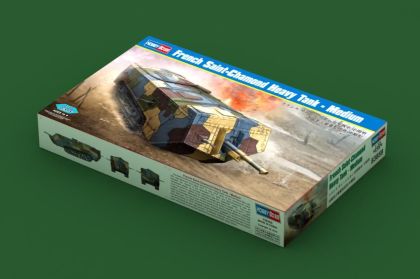
The Saint-Chamond was the second French heavy tank of the First World War, with 400 manufactured from April 1917 to July 1918. Born of the commercial rivalry between the makers of the Schneider CA1 tank, the Saint-Chamond was an inadequate design. Its principal weakness was the "caterpillar" tracks . They were much too short in relation to the vehicle's length and heavy weight ( 23 tons ). Later models, however, attempted to rectify some of the tank's original flaws by installing wider and stronger track shoes, thicker frontal armor and the more effective 75mm Mle 1897 field gun. The Saint-Chamond tanks remained engaged in various actions until the late summer of 1918, belatedly becoming more effective after combat had moved out of the trenches onto open ground . Eventually, however, the Saint-Chamond tanks were scheduled to be entirely replaced by imported British heavy tanks.
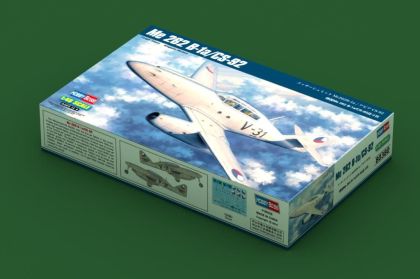
The Messerschmitt Me262 was the first jet fighter in the world. Project work had begun at Messerschmitt as early as April 1939 on a new high-speed fighter plane the propulsion of which was to consist of the “turbine jet” system. And on 18 th July 1942 the Me262 took off on his first flight. The Me262 was powered by two Jumo 004B type engines giving the Me262 amaximum speed of870km/hat an altitude of6000m. Its service ceiling was11400mand its range was 1050km. Basic armament consists of 4 × 30mm MK108 cannon installed in the nose. In addition, 2 × 12 type R4Mrockets could be carried the wings.
Dès que le produit sera de nouveau en stock, nous vous le proposerons en priorité – vous serez informé par e-mail et disposerez d un temps limité pour l acheter.
Avec votre consentement, nous pouvons utiliser les informations ci-dessous à des fins ultérieures ou les partager avec des partenaires sélectionnés. Pour chaque objectif (type de traitement), vous pouvez modifier vos paramètres et confirmer votre choix en cliquant sur le bouton « Enregistrer les paramètres »:
Toujours actif
Cookies essentiels
Il s'agit de fichiers techniques qui sont essentiels au bon fonctionnement de nos sites web et de toutes leurs fonctionnalités. Ils sont utilisés notamment pour le stockage des produits dans le panier d'achat, l'affichage des produits sur la liste de souhaits, la gestion des filtres, les paramètres personnels ainsi que les paramètres de consentement à l'utilisation des cookies. Pour ces cookies, votre consentement n'est pas nécessaire et il n'est pas possible de le retirer.
Fichiers cookies analytiques
Ils comptent les visites du site et en collectant des statistiques anonymes, permettent à l'exploitant de mieux comprendre ses visiteurs et d'améliorer continuellement les pages.
Fichiers cookies marketing
Ils collectent des informations pour mieux adapter la publicité à vos intérêts, à la fois sur ces sites web et en dehors.
Pour faciliter votre navigation sur nos pages, vous proposer du contenu personnalisé ou des annonces et analyser anonymement le trafic, nous utilisons des cookies que nous partagéons avec nos partenaires pour les réseaux sociaux, la publicité et l'analyse. Vous pouvez modifier ces paramètres avec le lien "Modifier les paramètres" et les modifier à tout moment dans le pied de page du site. Vous trouverez des informations plus détaillées dans nos Politiques de protection des données personnelles et d'utilisation des cookies.